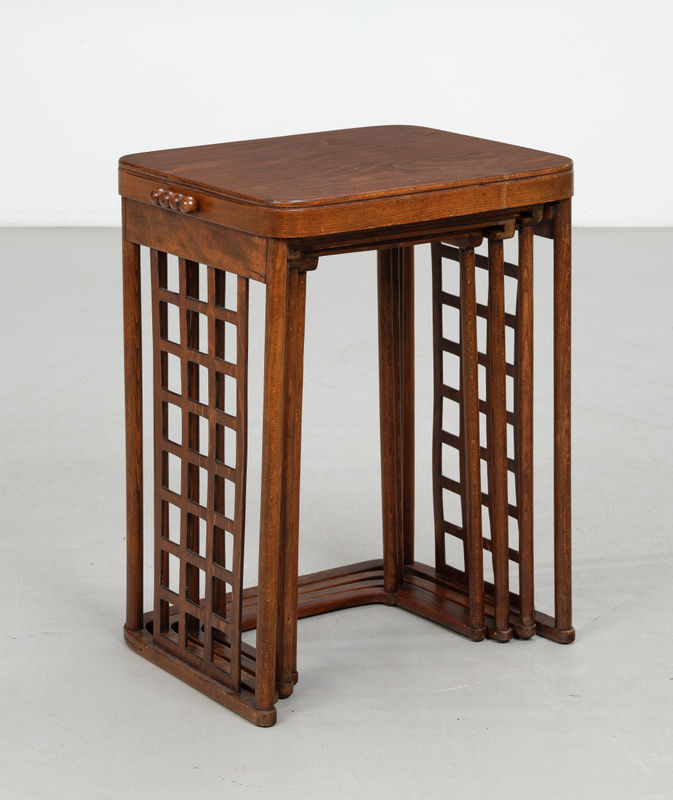
Josef Hoffmann's practice stands as a foundational reference for understanding functional objects as carriers of cultural and intellectual value. Rejecting both historicist decoration and purely utilitarian design, he pursued a disciplined formal language in which geometry, proportion, and craftsmanship articulated a clear ethical stance toward making.
Through the Wiener Werkstätte, Hoffmann insisted that furniture, lighting, and domestic objects be approached with the same seriousness as architecture. Objects were conceived as part of a total environment, where function existed not as optimization but as a measured condition-embedded within material intelligence and formal restraint.
Hoffmann's work offers a historical precedent for contemporary functional art practices that resist speed, standardization, and disposability. His designs continue to resonate in contexts that value precision, authorship, and the quiet authority of well-made objects.